


Let's clear the air right away: lab grown diamonds are real diamonds.
They share the exact same physical, chemical, and optical properties as diamonds formed in the earth. That means they have the same brilliant sparkle and legendary hardness. The only difference is their origin where one is a product of modern technology while the other comes from ancient geology.
A Clear Introduction to Lab Grown Diamonds

It is understandable to have questions. Are they an imitation? A clever replica? The answer is no. Lab grown diamonds are not like stand-ins such as cubic zirconia or moissanite. They are genuine diamonds, made of pure carbon atoms arranged in that iconic crystal structure.
A simple analogy is ice. Ice from your freezer is just as much "ice" as a piece from a glacier. Both are frozen H₂O, just formed in different environments. The same logic applies to diamonds. Lab grown stones are a testament to scientific advancement, offering a modern alternative that is indistinguishable from a mined diamond to the naked eye. Even a trained jeweller would need specialised equipment to tell them apart.
Understanding the Basics
The first step in appreciating lab created diamonds is to see them for what they are, which is another source for the same gemstone. They are not a "lesser" option. This is an important point because it means they are held to the exact same quality standards, the 4Cs, that the diamond industry has used for decades.
Here is what you should know:
- Identical Properties: They share the same hardness (10 on the Mohs scale), sparkle (refractive index), and weight (density) as natural diamonds.
- Real, Not Synthetic: You might hear the term "synthetic," but in gemology, this simply means man-made rather than fake. They are 100% genuine diamonds.
- Certified Quality: Leading gemological labs grade them on the same 4Cs: Cut, Colour, Clarity, and Carat.
This is not a niche trend; it is a global shift. In Europe, lab grown diamonds are becoming a significant part of the jewellery world, especially for engagement rings and other fine pieces. The global market is projected to reach $59.2 billion by 2032, with Europe being the second largest market driving that growth. This aligns with a rising demand for transparent and sustainable luxury. You can explore these market trends in this detailed report.
Lab grown diamonds offer the opportunity to own a beautiful, timeless piece of jewellery with a story rooted in human innovation. Every stone comes with a clear, documented history.
Whether you are starting to look for an engagement ring or are simply curious about the technology, the key takeaway is this: lab grown diamonds are real diamonds. Accepting this opens up a world of choice, value, and modern elegance.
The Science of Creating a Diamond
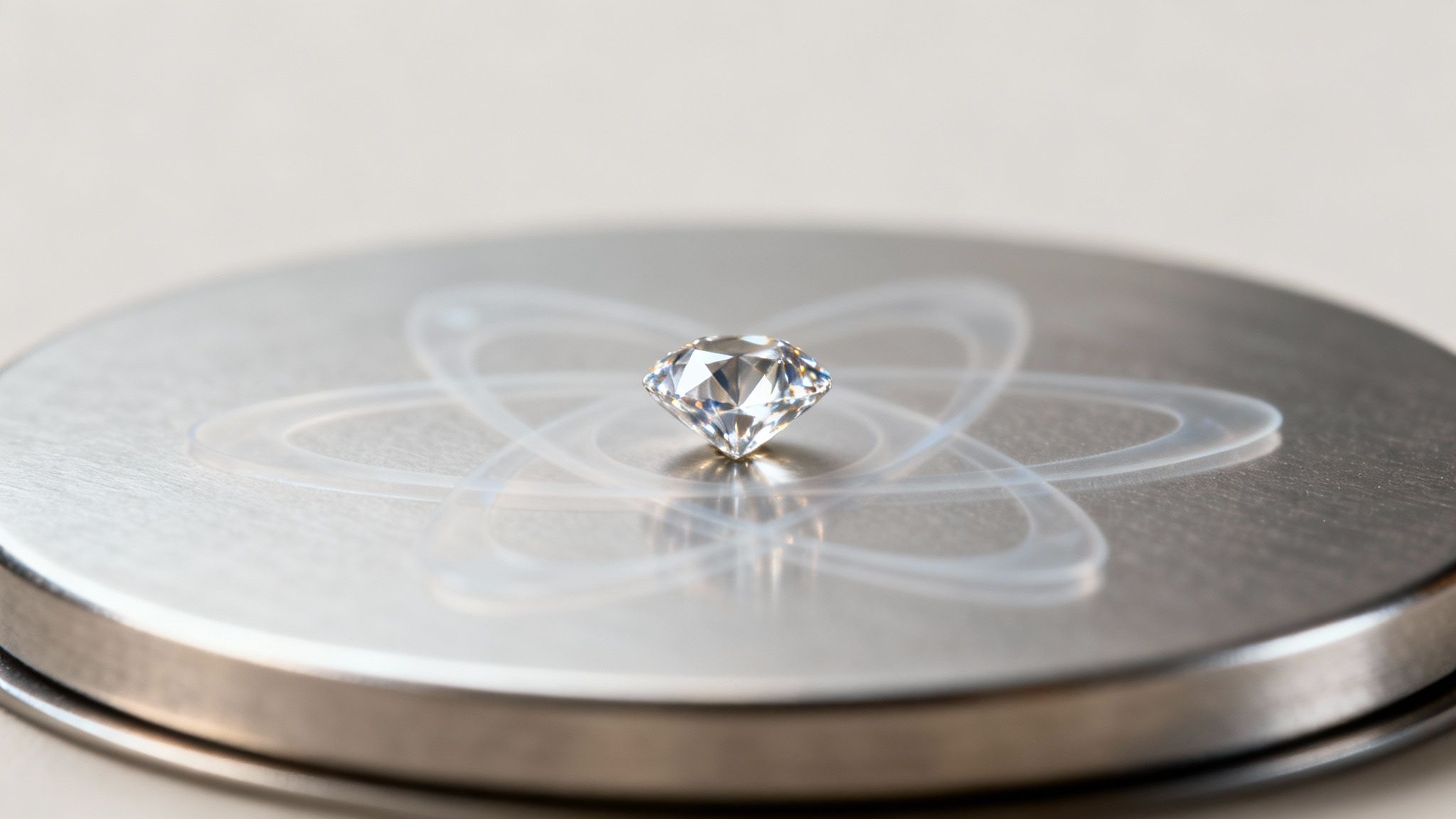
Creating a diamond in a lab is a story of human ingenuity. We have learned how to recreate the exact, intense conditions that form diamonds deep inside the Earth, but instead of taking billions of years, the process happens in a matter of weeks. It is about providing the right environment for carbon atoms to form a perfect crystal lattice.
The process starts with a tiny slice of a pre-existing diamond, known as a diamond seed. This is the blueprint. It provides the crystal structure that new carbon atoms will attach to, ensuring the new stone grows into a genuine diamond.
The High Pressure High Temperature Method
The first technique, High Pressure High Temperature (HPHT), is the original method. It is about as close as you can get to mimicking nature’s process. Think of the immense pressure and heat found in the Earth's mantle, but recreated in a controlled lab setting.
Here is how it works: the diamond seed is placed in a chamber with a pure carbon source like graphite. The pressure and heat are increased to extreme levels with pressures of around 1.5 million pounds per square inch and temperatures climbing to 1,500° Celsius.
Under these intense conditions, the carbon source melts, and its atoms begin to bond with the diamond seed. Over several weeks, they crystallise one by one, building a new, larger rough diamond. The result is a stone that is chemically and structurally identical to one that took millennia to form underground.
The HPHT method is like a scientific pressure cooker for gems. It uses the fundamental ingredients of carbon, heat, and pressure in a precise recipe to grow a genuine diamond.
The Chemical Vapor Deposition Method
The second, more modern technique is Chemical Vapour Deposition (CVD). If HPHT is about force, CVD is a more refined approach. It is less like a pressure cooker and more like 3D printing, but at an atomic scale.
A diamond seed is placed inside a sealed vacuum chamber, which is then filled with a carbon rich gas like methane. The chamber is heated, though not as intensely as with HPHT, usually somewhere between 800° and 1,200° Celsius.
Then, the science happens:
- Gas Activation: Microwave energy is used to break the gas molecules apart.
- Carbon Release: This process frees up the carbon atoms.
- Crystal Growth: These freed carbon atoms are drawn down to the cooler diamond seed, where they settle and bond to the crystal structure.
Layer by layer, the diamond grows. The CVD method has become popular because it offers excellent control over the diamond’s quality, often producing exceptionally clear and colourless stones.
Ultimately, whether a diamond is born from HPHT or CVD, the destination is the same. Both are real diamonds, impossible to tell apart from each other or a mined diamond without specialised gemological equipment. They are just two different journeys to the same brilliant result.
Comparing Lab Grown and Mined Diamonds
Put a lab grown diamond next to a mined one, and you will find you simply cannot tell them apart. Not with your eyes, and not even with a jeweller's loupe.
They are identical twins separated only by their origin story. Both are pure, crystallised carbon. Both share the same hardness and the same fiery brilliance that makes a diamond so captivating. It takes a trained gemologist with highly specialised equipment to spot the microscopic growth characteristics that reveal a diamond’s birthplace.
What Really Sets Them Apart?
If they look and feel the same, what is the real difference? The distinction is not in the stone itself, but in its story, including its journey, its impact, and what it represents.
For many people, the most important difference is having a clear and transparent origin. Lab grown diamonds are created in controlled environments, meaning their entire history is known from start to finish. This traceability offers peace of mind, avoiding concerns about the ethical conflicts that have shadowed parts of the diamond mining industry.
To help you see the bigger picture, here is a side-by-side comparison.
Lab Grown vs Mined Diamonds At a Glance
This table breaks down the core similarities and differences, giving you a clear view of what each type of diamond offers.
| Attribute | Lab Grown Diamond | Mined Diamond |
|---|---|---|
| Composition | Identical - pure crystallised carbon | Identical - pure crystallised carbon |
| Appearance | Indistinguishable to the naked eye | Indistinguishable to the naked eye |
| Hardness | 10 on the Mohs scale | 10 on the Mohs scale |
| Origin | Created in a controlled laboratory setting | Formed deep within the Earth's mantle |
| Supply Chain | Fully traceable and transparent | Can be complex and difficult to trace |
| Environmental Impact | Lower land and water usage | Significant land and water disruption |
| Ethical Concerns | Free from mining-related conflict | Subject to the Kimberley Process to prevent conflict |
| Price | More accessible, offering greater choice | Higher due to rarity and mining costs |
The choice is not about which one is a "real" diamond as they both are. The decision comes down to what you value most.
Environmental and Ethical Transparency
The environmental footprint is another significant factor. Traditional diamond mining is an intensive process, involving the excavation of massive amounts of earth and the use of large quantities of water. While growing a diamond in a lab requires energy, its overall impact on land and ecosystems is dramatically smaller.
This ethical clarity is a major reason many people feel drawn to lab grown diamonds today. They offer a modern path to owning a symbol of love that feels aligned with a conscious awareness of our planet and its people. For a closer look at the journey of earth formed stones, you can explore our guide to natural diamonds.
Choosing a lab grown diamond means you know its entire life story, from a tiny seed to a brilliant gemstone. It is a story of science and precision, free from the uncertainties of a complex global supply chain.
The Value of Smart Choice
Perhaps the most practical difference is price. Because the creation process is more efficient and less resource intensive, lab grown diamonds have a more accessible price point than mined diamonds of the same quality and size.
This is not about one being "cheaper"; it is about giving you more options. The price difference might mean you can choose a larger or higher quality diamond without stretching your budget. It could also allow you to design a more intricate or personalised piece of jewellery. It puts the power back in your hands to focus on what matters most to you.
This new level of accessibility is fuelling significant growth. The lab grown diamond market in Europe is projected to reach $8.61 billion in 2025, a clear signal that buyers value both beauty and intelligent sourcing.
Ultimately, deciding between a lab grown and a mined diamond is a personal one. It is about weighing the romance of a stone billions of years old against the modern ingenuity of one created by science. Both paths lead to the same beautiful result: a brilliant diamond that will last forever.
How Diamond Quality and Certification Work
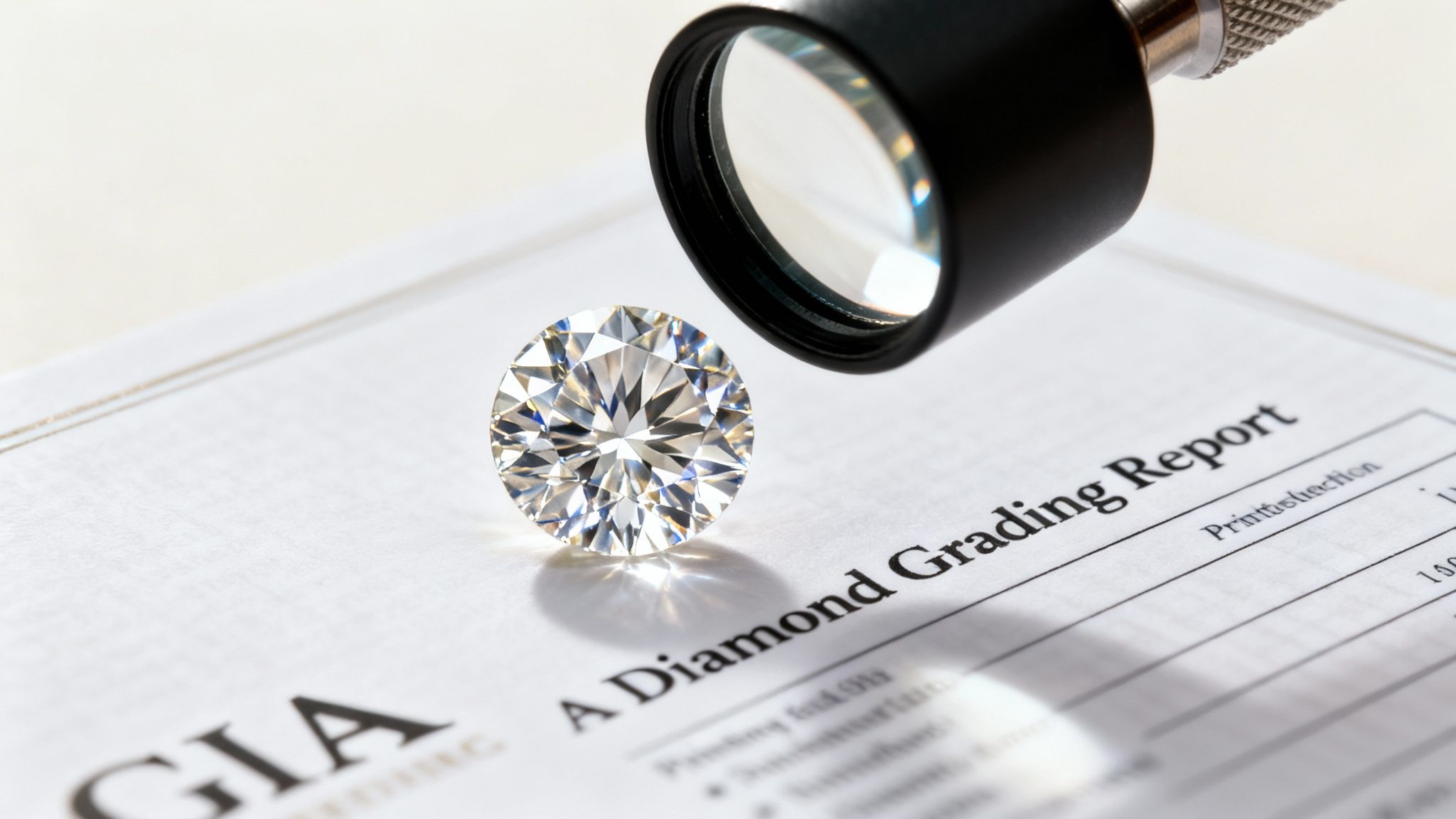
When it comes to a diamond's quality, there is no separate rulebook for those grown in a lab. They are graded with the same universal language that has defined a diamond’s beauty for generations: the 4Cs. This system ensures every diamond, no matter its origin, is measured by a consistent and trusted set of standards.
This is an important point because it confirms lab grown diamonds are held to the same high benchmarks for quality and beauty as mined diamonds. It is about the stone's final performance, not its origin story.
Let's break down what those 4Cs mean.
The 4Cs: Your Guide to Diamond Quality
Think of the 4Cs: Cut, Colour, Clarity, and Carat, as a diamond's unique DNA. Each one plays a distinct role in its overall appearance, and understanding how they work together is the key to choosing a truly beautiful stone.
Here is a rundown of what each 'C' brings to the table:
- Cut: This is the most important factor for sparkle. Cut does not refer to the diamond's shape (like round or oval), but to the precision of its facets. These tiny, polished surfaces act like mirrors, and a well cut diamond will bounce light around masterfully to create brilliance and fire.
- Colour: Diamond colour is graded on a scale from D (completely colourless) to Z (light yellow or brown). For the classic, icy white look, less colour is better. Lab grown diamonds often excel here, with many achieving top tier colourless grades.
- Clarity: This measures the absence of tiny internal characteristics called inclusions or surface blemishes. Most of these are microscopic and invisible to the naked eye. The clarity scale ranges from Flawless (F) down to Included (I), where flaws are easy to see.
- Carat: This is simply a measure of a diamond's weight. One carat equals 0.2 grams. While a higher carat weight usually means a larger looking stone, the Cut can have a big impact on how large a diamond appears.
Of all these, the Cut has the greatest influence on a diamond's visual appeal. A stone with a slightly lower colour or clarity grade can still look stunning if its cut is excellent. A precise cut can mask other characteristics and maximise the stone's brilliance.
Why Independent Certification Is Essential
How can you be sure about a diamond's 4Cs? That is where independent certification comes in. A diamond grading report, often called a certificate, is your impartial proof of quality. It is a detailed blueprint of your diamond, assessed by expert gemologists in a neutral lab.
Reputable institutes like the International Gemological Institute (IGI) or the Gemological Institute of America (GIA) are the industry standard. Their reports give you a full breakdown of the diamond's characteristics, often including a plotted diagram showing the exact location of any inclusions.
A grading report is more than just a piece of paper; it is your assurance that the diamond you are considering is exactly what it claims to be. It provides transparency and empowers you to make an informed decision with confidence.
When you look at a certificate, you will see the 4Cs clearly listed, along with other key details like the diamond’s precise measurements, proportions, and finish. For lab grown diamonds, the report will always clearly state the diamond’s origin as "laboratory-grown" and may specify the growth method (HPHT or CVD).
This transparency is what it is all about. It removes guesswork and allows you to compare different diamonds accurately, helping you focus on the qualities that matter most to you. Armed with this knowledge, you can feel confident in a diamond's beauty, quality, and value.
How to Select Your Lab Grown Diamond Jewellery
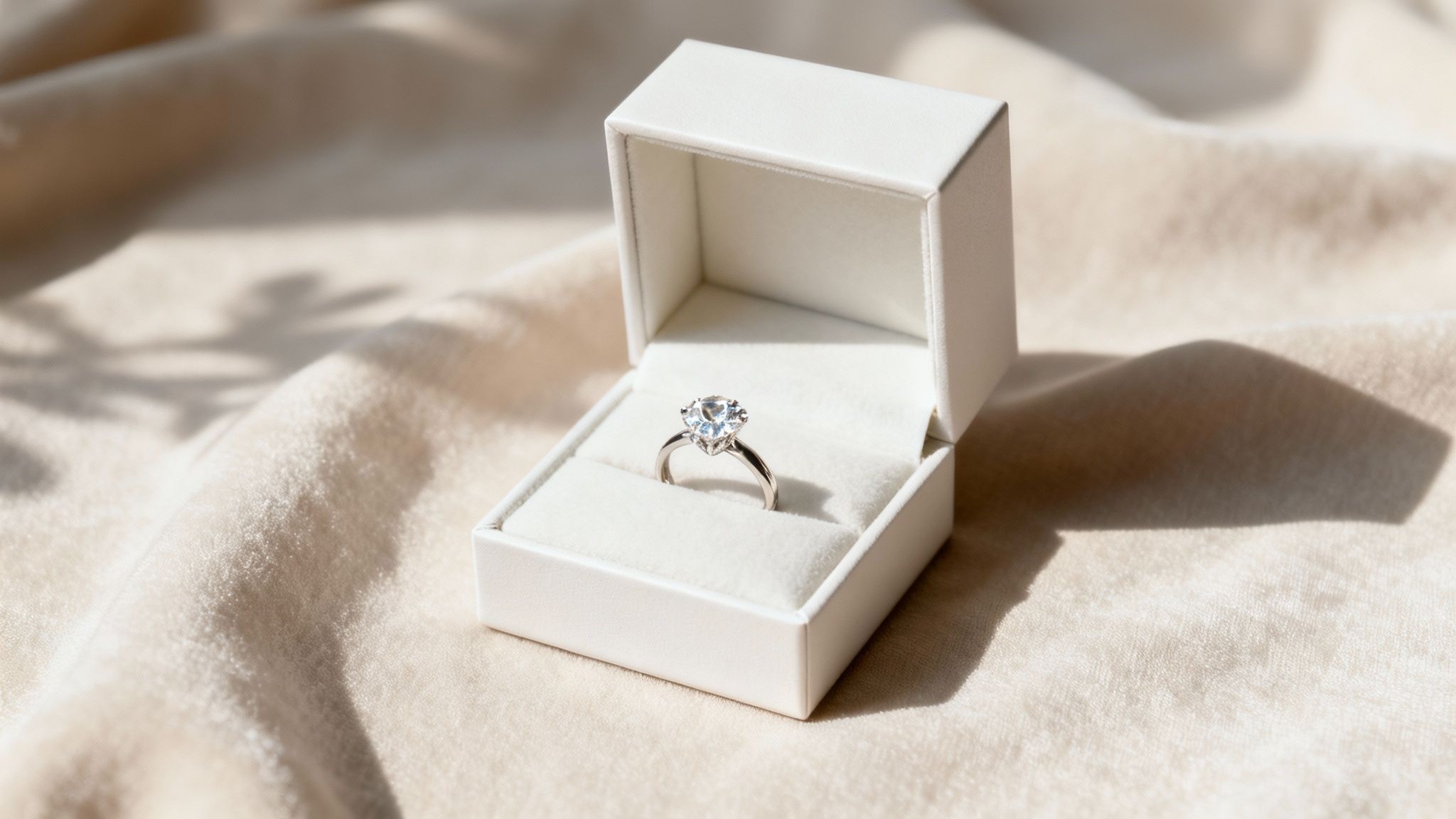
Choosing your jewellery is the part where all this information including the 4Cs, the science, and the ethics comes together. It is about more than specifications on a certificate; it is a personal decision. Selecting a lab grown diamond means translating technical details into a piece that reflects your style and fits your life.
One of the best things about choosing a lab grown diamond is the freedom it gives you. Since they offer great value, you have more flexibility with different designs, larger sizes, or more intricate settings without being held back by a budget. It frees you up to focus purely on what you love.
Choosing an Engagement Ring
An engagement ring is one of the most personal pieces of jewellery you will ever choose, so the design should feel right. The diamond's cut is often the starting point. A classic round brilliant has timeless, fiery sparkle, while a sleek emerald cut offers a more modern, architectural feel.
The setting is just as important as it is the metal framework that holds your diamond and defines the ring's character. A solitaire setting is about minimalist elegance, letting the stone take centre stage. If you want more sparkle, a halo setting surrounds the main diamond with a ring of smaller stones, adding brilliance and making the centre stone appear larger. If you are starting this journey, a practical guide on how to choose an engagement ring can be a great help in navigating all the details.
The real joy of designing a ring with a lab grown diamond is the ability to achieve your ideal look. You can prioritise a higher quality cut or a more intricate setting, creating a piece that feels both luxurious and completely true to you.
Finally, think about the metal. Platinum and white gold have a cool, contemporary feel, while yellow gold offers a warm, traditional touch. Rose gold brings a romantic, vintage inspired warmth to the piece. These metals do not just hold the gem; they complete it. For anyone curious about jewellery metals, you can learn more about the meaning behind 925 silver in our detailed article.
Selecting Jewellery for Everyday Wear
Beyond milestone pieces, the durability of diamonds makes them perfect for daily life. A simple pair of lab grown diamond stud earrings or a delicate pendant necklace can add a touch of quiet elegance to any outfit.
When you are choosing pieces for daily wear, practicality and comfort are key.
- Low Profile Settings: Bezel or flush settings are fantastic because they encircle the diamond with metal, protecting it and making it less likely to snag on clothing.
- Classic Shapes: You cannot go wrong with round or princess cut studs. They are versatile, timeless, and effortlessly complement any style.
- Secure Clasps: For bracelets and necklaces you will wear often, check that the clasp is strong and easy to manage.
The beauty of any piece of jewellery is in how much you enjoy wearing it. Lab grown diamonds make it possible to own a stone of exceptional beauty and hardness, making them a brilliant and practical choice for those pieces you will live in for years to come.
Common Questions About Lab Grown Diamonds
As you get closer to choosing a piece of jewellery, it is normal for a few questions to come to mind. To help you feel completely comfortable with your decision, we have gathered some of the most common queries we hear about lab grown diamonds and answered them clearly.
Are Lab Grown Diamonds Real Diamonds?
Yes, absolutely. A lab grown diamond is not a "fake" or a "simulant" like cubic zirconia, but rather it is a real diamond. It has the exact same chemical, physical, and optical properties as a diamond that came from the earth. Both are pure, crystallised carbon that share the same brilliance, fire, and hardness.
The only difference is their origin. A good analogy is an orchid grown in a high-tech greenhouse versus one discovered in a rainforest. They are the same beautiful flower, just brought to life in different environments. This is why gemological labs grade them using the same strict standards as mined diamonds.
Will Lab Grown Diamonds Keep Their Sparkle?
Yes, a lab grown diamond will sparkle for a lifetime. Just like a mined diamond, it scores a perfect 10 on the Mohs scale of hardness, which makes it one of the toughest materials on earth. Its beauty and brilliance are permanent; they will not fade, get cloudy, or change over time.
The sparkle you see comes from the stone’s cut, which refers to the precise angles and facets that reflect light. To keep it looking its best, all it needs is a simple, regular cleaning to wash away the oils and dirt from everyday life. For more on this, check out our guide on essential jewellery maintenance tips to keep your pieces shining longer.
The lasting sparkle of a diamond is one of its most treasured qualities. This is true for every real diamond, whether it was created in a lab or formed in the earth.
Can a Jeweller Tell the Difference?
Even for a trained gemologist using a standard jeweller’s loupe, telling a lab grown diamond from a mined one by sight is practically impossible. They look, feel, and perform identically.
The only way to confirm a diamond's origin is with advanced scientific equipment that can detect tiny differences in their crystal growth patterns. This is why independent certification is so important. A grading report from a respected lab like IGI or GIA will always state the diamond’s origin, giving you complete transparency and confidence in your purchase.
Are Lab Grown Diamonds an Ethical Choice?
For many people, this is a major draw. Because lab grown diamonds are created in a controlled environment, their origin is completely traceable. This means they are free from the ethical concerns, like human rights issues or conflict financing, that have been tied to parts of the diamond mining industry.
From an environmental standpoint, creating a diamond in a lab generally uses far less water and causes significantly less land disruption than traditional mining. While the process requires energy, the industry is increasingly shifting towards using renewable power to reduce its carbon footprint. For many buyers, this makes a lab grown diamond a choice that feels right.
Do Lab Grown Diamonds Hold Their Value?
This is an important question. Mined diamonds have historically held a certain resale value, largely due to their perceived rarity and an established market. It is good to remember, though, that almost any diamond, whether mined or lab grown, is best viewed as a sentimental purchase, not a financial investment.
Lab grown diamonds currently have a lower resale value than their mined counterparts. This is partly because their supply is not limited by what can be found in the earth. The real value they offer is at the time of purchase, where they allow you to get a larger or higher quality stone for your budget. The decision comes down to what matters most to you: the potential long-term resale value of a mined stone or the immediate value and transparent origin of a lab grown one.