


Choosing a wedding band is one of the more personal decisions you will make for your wedding. This is the one symbol you will wear every day as a quiet and constant reminder of a promise and a partnership. It is a lasting choice that deserves thoughtful consideration.
Your Guide to Finding the Right Wedding Band
Finding the right ring should not feel overwhelming. I have put this guide together to walk you through the process, breaking down what really matters. We will explore the different personalities of various metals and help you find a style that fits your life.
We will get into the details that make a difference, such as how a ring's finish changes its look over time or how its profile can create a seamless stack with your engagement ring. For a deeper dive, this guide to choosing the perfect wedding band ring is another useful resource.
What to Expect From This Guide
This guide is designed to give you the confidence to choose well. We will cover all the key areas so you feel prepared:
- Materials and Finishes: Understanding the difference between platinum, gold, and other modern metals is the first step. We will look at how they wear, what they look like, and how they feel.
- Styles and Designs: From simple and timeless bands to eternity rings, your choice should feel like a natural extension of who you are. We will cover some of the most popular styles.
- Fit and Pairing: A wedding band needs to be comfortable enough for daily life and look right next to an engagement ring. We will make sure you get this crucial part right.
Think of your wedding band as something that becomes a part of you. The goal is to find a ring that feels so right on your hand, you almost forget it is there.
By the end, you will have what you need to choose wedding band rings that feel like they were made for your story. Let’s start with the foundation: the materials.
Understanding Wedding Band Materials and Finishes
The metal you choose for your wedding band is a significant decision. It is about more than how the ring looks; it dictates how it feels, how it wears over time, and how it holds up to your daily life. The metal is the foundation of your ring's personality. Getting to know the differences is the first step to finding a ring that is not just beautiful but right for you.
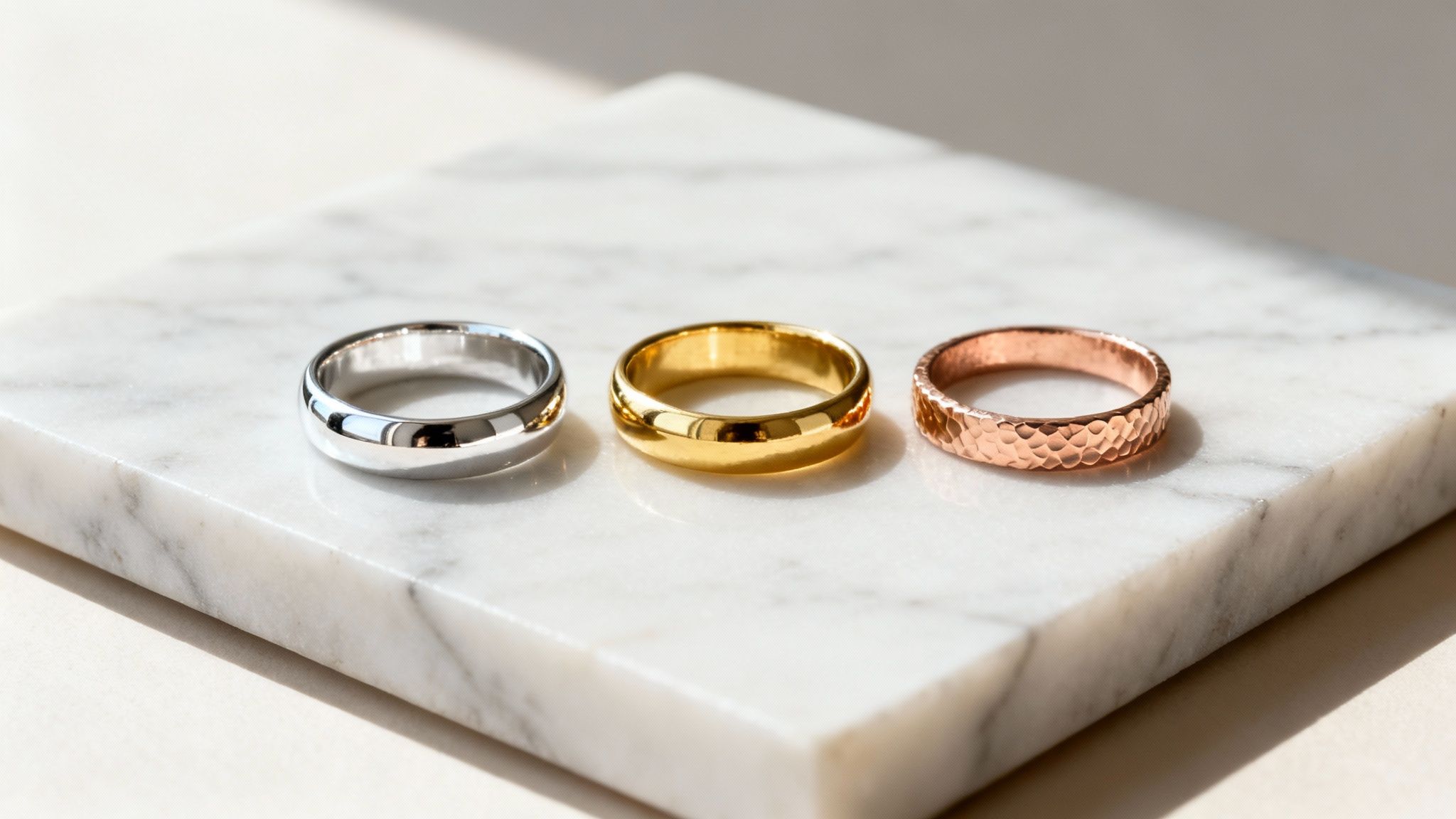
Let's break down the world of metals and finishes so you can choose with confidence. We will look at the materials that have symbolised commitment for centuries, plus a few modern contenders.
The Classic Choices: Platinum and Gold
For most people, the conversation begins with classic precious metals. There is a reason platinum and gold are so treasured as they have an inherent value, timeless beauty, and a rich history.
Platinum is known for its rarity and its pure, silvery white colour that will not fade or change. It is also incredibly dense, which gives it a substantial feel on your finger. One of its best features is that it is hypoallergenic, making it a good choice for sensitive skin.
Gold offers a warmth and versatility that is hard to beat. You will rarely find a ring made from pure 24-karat gold because it is too soft for daily wear. Instead, it is mixed with other metal alloys to give it strength, and this process is what creates the different shades we love.
- Yellow Gold: This is gold in its most iconic form. It gets its warm glow from being mixed with metals like copper and zinc, and it looks good on almost any skin tone.
- White Gold: To get a silvery white look, yellow gold is blended with white metals like palladium or nickel. It is then usually plated with rhodium for a brilliant and mirror-like shine.
- Rose Gold: That romantic and pinkish hue comes from adding more copper into the mix. It is a warm alternative if you are looking for something a little different.
A quick word on "karats", as it is a measure of gold purity out of 24 parts. So, 18-karat gold is 18 parts pure gold and 6 parts other metals. A lower karat like 14k has more alloy metals, which makes the ring harder and more resistant to scratches.
These precious metals remain a popular choice for wedding rings. White gold, in particular, is a favourite. In fact, the men's metal wedding band market alone was valued at USD 1.05 billion in 2022, a number that is expected to keep climbing. You can see more of these market trends at Grandview Research.
Exploring Modern Metal Alternatives
Beyond the traditional choices, there is a world of modern metals that offer compelling advantages, especially if you have an active lifestyle or work with your hands.
Titanium, for example, is incredibly strong yet feels almost weightless. If you are not used to wearing jewellery, it is a good option because you will barely notice it is there. It is also resistant to corrosion and is hypoallergenic.
Other metals, like sterling silver, offer a classic look with a deep history. If you are curious about its cultural importance, you can learn more about the symbolism of silver in jewellery.
Your ring's material should align with your daily activities. A doctor who constantly washes their hands might prefer the durability of platinum, while an office worker might love the classic warmth of 18k yellow gold.
A Quick Comparison of Popular Wedding Band Metals
To make things a bit easier, here is a table that breaks down the key characteristics of the most common metals. This can help you decide what is most important to you, whether it is durability, appearance, or maintenance.
| Metal | Durability | Appearance | Common Finishes | Best For |
|---|---|---|---|---|
| Platinum | Extremely durable, dense, scratches but won't lose metal. | Naturally white, won't tarnish. | Polished, Matte, Brushed | Those with active lifestyles or sensitive skin who want a premium, lasting ring. |
| Gold | Good durability (14k is stronger than 18k). Can scratch. | Yellow, White, or Rose. Can be re-polished. | Polished, Matte, Brushed, Hammered | Anyone seeking a timeless look with options for different colours. |
| Titanium | Very strong, scratch-resistant, and feather-light. | Naturally greyish-silver. Can be coloured. | Brushed, Matte, Polished | Active individuals or those not used to wearing rings who need something tough and light. |
| Silver | Softer and less durable than other metals. Can tarnish. | Bright white shine. Requires regular cleaning. | Polished, Oxidised | Those who love a classic, bright look and don't mind the upkeep. |
Choosing the right metal is about balancing what you love with what your lifestyle demands. There is no single "best" option but rather the one that is best for you.
The Final Touch: Choosing a Finish
The finish is the texture applied to the surface of your ring, and it makes a massive difference to the final look. This detail can take a ring from classic to contemporary, or from subtle to eye-catching.
Here are a few of the most common finishes you will come across:
- Polished: This is that classic and mirror-like shine. It is highly reflective and timeless, but it will show scratches more easily.
- Matte: A smooth and non reflective surface that has a soft and frosted look. It is ideal for a modern and understated vibe and does a better job of hiding small scuffs.
- Brushed: You can see fine and parallel lines on the surface, almost like it was lightly textured with a wire brush. It is great for hiding daily wear and tear while still looking sophisticated.
- Hammered: This finish is created by a jeweller's hammer, leaving a pattern of small and dimpled facets. It gives the ring a unique, rustic, and handcrafted feel.
Your choice of finish is just as personal as the metal itself. A polished band will catch the light, while a matte or brushed one feels more subtle and modern. It is the combination of metal and finish that creates a wedding band that truly feels like your own.
Finding a Style That Tells Your Story
Once you have settled on the metal and finish, you get to the style. This is where your ring’s personality truly shines. It is less about following trends and more about finding a design that feels like you. The world of wedding bands is diverse, with a style for every taste ranging from the understated to the intricately detailed.
Think of it like finding a coat you love as it should not just look good, it should feel like a natural extension of yourself.
Classic and Modern Designs
For many, simplicity is elegance. A classic wedding band is just that: a clean and unadorned ring, often with a gentle dome or a flat edge. Its appeal is in its timelessness; this is a ring that will look just as good decades from now as it does today.
On the other hand, a modern band often plays with sharper lines and geometric shapes. It might have a crisp and flat profile or a minimalist design that feels both current and sophisticated. These are well suited for anyone who loves clean aesthetics and architectural details.
The Comfort Fit Difference
Beyond how a ring looks, how it feels is important. This is where the comfort-fit band comes in. It is designed with a slightly rounded interior, which means less of the metal’s surface touches your skin.
That subtle curve makes a big difference. It lets the ring slide over your knuckle more easily and feels smoother for everyday wear, which is especially noticeable with wider bands. It is a small detail that pays off in long-term comfort.
The Sparkle of Diamond and Gemstone Bands
Adding stones to a wedding band brings a new level of character. You can get creative here whether you want just a hint of sparkle or a continuous circle of light. To get a better feel for how different designs look, you can explore diverse wedding band styles in a visual gallery.
When it comes to stone set rings, there are a few main types:
- Eternity Bands: These rings have an unbroken circle of diamonds or gemstones wrapping around the entire band. They are a symbol of unending love and create sparkle from every angle.
- Half Eternity Bands: As a practical alternative, these bands have stones set only across the top half. You get a dazzling impact from the front with a smooth and comfortable metal surface on the palm side.
- Channel Set Bands: In this sleek style, stones are nestled into a channel between two walls of metal with no prongs. It is a very secure setting that protects the stones, making it a good choice for an active lifestyle.
The choice between an eternity and a half eternity band often comes down to lifestyle and practicality. An eternity ring offers maximum sparkle, but a half eternity is often more comfortable and easier to resize if needed.
Distinctive and Contoured Designs
If you are after something with more unique character or need a band to pair with a specific engagement ring, there are some specialized options.
A vintage inspired band might feature milgrain, a delicate and beaded detail along the edges of the metal. This small addition adds a touch of antique charm and texture, giving the ring an heirloom feel.
A contoured wedding band, sometimes called a curved or notched band, is shaped to sit flush against your engagement ring. If your engagement ring has a large centre stone or an unusual shape, a contoured band will curve around it, creating a nested pair without any awkward gaps. It is a design that makes the two rings look like they were always meant to be together.
How to Achieve the Perfect Fit and Pairing
Finding a wedding band you love is the first step. The next is making sure it fits well and sits perfectly next to your engagement ring. These two elements, the fit and the pairing, are what turn a lovely ring into a part of you, something you will be comfortable wearing every day. It is about finding a balance between comfort, proportion, and your personal style.
Let's walk through how to get these details right, from nailing the width to creating a stack that feels completely you.
Getting the Sizing and Width Just Right
Before you think about styles, let's talk about the physical fit. A ring that is too tight is a constant annoyance, while one that is too loose can be a source of worry. The width of the band plays a big part in this. A wider band covers more skin, which can make it feel much snugger than a thin band of the exact same size.
Here are a few tips for getting an accurate size:
- Measure at the End of the Day: Your fingers swell slightly as the day goes on. Measuring them in the late afternoon or evening will give you a more realistic reading for a comfortable all day fit.
- Watch the Temperature: Fingers can shrink in the cold and swell in the heat. Try to get your finger sized when you are in a comfortable and stable room temperature.
- Think About the Width: If you are eyeing a wider band (think 6mm or more), it is often smart to go up by a quarter or half size to make sure it does not feel restrictive.
The goal is a ring that slides over your knuckle with a little effort but then sits snugly at the base of your finger without spinning or pinching. Try on several sizes and widths to see what feels best.
Creating a Harmonious Pairing with Your Engagement Ring
Pairing your wedding band with an engagement ring is about creating a cohesive look where both rings flatter each other, whether you want a perfect match or a more eclectic vibe. It is about considering how the profiles, heights, and styles work together.
A great pairing feels intentional and balanced. Europe, for example, remains the world's largest market for wedding rings, a testament to the enduring value we place on these symbols. The market is projected to hit USD 109.67 billion by 2030, fueled by couples investing in meaningful bands. You can dive deeper into these global trends in the full report from TechSci Research.
Exploring Different Pairing Styles
There is no single right way to pair your rings, so your personal style should be your guide. Here are three popular approaches people take to create their bridal set:
- The Matched Set: This is the most traditional route, where the wedding band is designed to be a copy of the engagement ring in metal, width, and style. It creates a seamless and unified look.
- The Complementary Mix: This approach is about finding a band that coordinates with your engagement ring without being identical. Think about mixing metals such as a yellow gold band with a platinum engagement ring, or pairing a simple solitaire with a band that has some sparkle.
- The Eclectic Stack: For a more fashion forward style, building a stack of different bands is a way to show off your personality. You can combine different textures, and shapes, and even add gemstone bands for a pop of colour.
The best pairing is the one that makes you smile when you look at it. Try on different combinations, take some photos, and see what arrangement feels most authentic to you.
Adding a Personal Touch to Your Wedding Band
Your wedding band is a deeply personal symbol of your connection. Adding a custom touch transforms it into a one-of-a-kind treasure by embedding your unique story right into the metal and stone. It is about creating something that speaks a private language between the two of you.
These details infuse your wedding bands with a meaning that goes beyond their appearance, making them a tangible reminder of your promises.
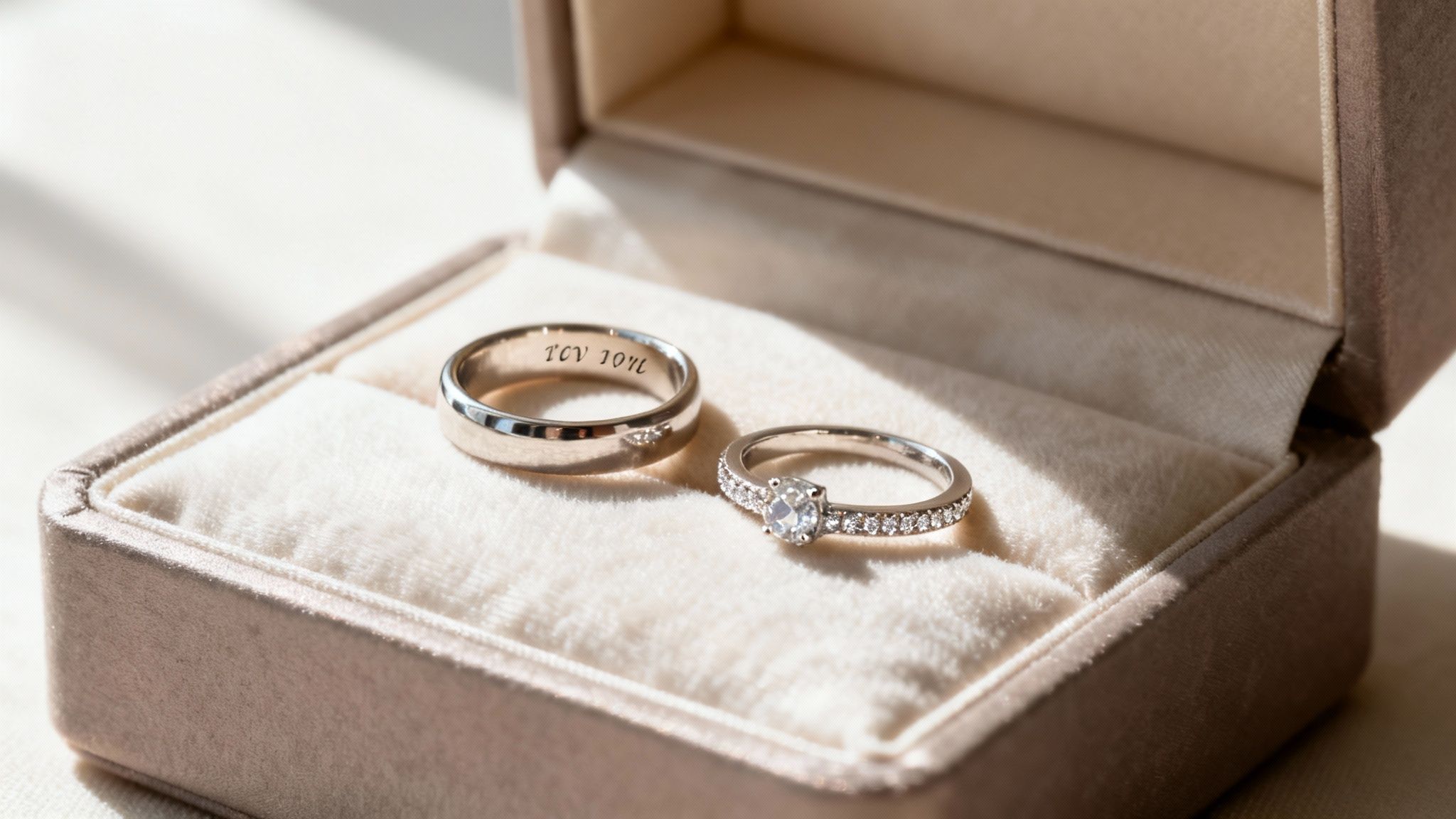
From a hidden message inscribed on the inside to the sparkle of a meaningful stone, let's look at some of the ways to make a wedding band entirely your own.
The Art of Engraving
Engraving is an intimate way to personalize your ring. It is a secret held between you, your partner, and the band itself. While dates and initials are timeless classics, you can also think more creatively.
Here are a few ideas:
- Meaningful Coordinates: The latitude and longitude of where you first met or proposed.
- A Snippet of a Vow or Poem: A short phrase that holds special significance.
- A Private Symbol or Drawing: A simple graphic like a fingerprint, the soundwave of you saying "I love you," or a small icon representing a shared memory.
The space inside a ring is limited, so the message has to be brief, but its impact is large. It is a detail you will always know is there.
Adding Sparkle with Diamonds and Birthstones
Incorporating gemstones is another way to add a personal layer to your wedding band. A flash of colour or a subtle sparkle can introduce symbolism that connects the ring to your life story.
Diamonds are a classic choice. Their sparkle complements any metal, and they can be set in various ways to create different effects. If you are weighing your options, you can explore the differences between lab grown and mined stones in our detailed guide.
Birthstones, on the other hand, add a distinctly personal touch. Including your partner's birthstone, your own, or those of your children can turn your ring into a family heirloom. Sapphires, for example, have long symbolised loyalty and devotion, making them a meaningful option for a wedding band.
A single small stone set on the inner band, often called a 'secret stone', is a subtle way to include this personal detail. It is a private nod to your connection that is hidden from the world.
Understanding Stone Setting Styles
The way a stone is set in the ring does not just keep it secure; it also plays a role in the final look. Each style offers a different aesthetic and level of protection.
- Pavé Setting: Tiny diamonds are set very close together and held in place by miniature beads of metal. This creates a surface that looks like it has been paved with sparkle.
- Channel Setting: Stones are set side-by-side within a channel carved into the band, with two walls of metal holding them securely. It is a sleek and modern look that offers good protection.
- Bezel Setting: A thin metal rim completely wraps around the edge of the stone. This setting provides the most security for the gem and has a clean and contemporary feel.
Whether you choose a hidden engraving or a meaningful stone, these personal touches can elevate your wedding band into a testament to your unique story.
Caring for Your Wedding Band for a Lifetime of Wear
You will be wearing your wedding band every day, so it is going to see a lot of life. With a little bit of regular care, you can make sure it looks just as stunning decades from now as it did on your wedding day. You do not need a complicated routine, just some consistent attention.
Most of the time, a gentle clean at home is all it takes. For metals like gold, platinum, and titanium, all you need is a bowl of warm water with a few drops of mild dish soap. Let your ring soak for a few minutes to loosen any grime.
Then, take a very soft bristled brush like a baby toothbrush and gently scrub around any details or stone settings. Rinse it thoroughly under warm water and pat it dry with a soft and lint free cloth. This quick clean removes the daily build up of lotions, oils, and dust that can make your ring look dull. For a deeper dive, take a look at our guide on essential jewellery maintenance tips.
When to Bring in the Pros
While cleaning at home keeps your ring looking great day to day, a professional jeweller is your ring’s expert. Taking your band in for a check up at least once a year is key to its long term health. A jeweller has the equipment to give it a deep, professional clean and polish that restores its original shine.
A professional can also inspect prongs and settings to ensure any diamonds or gemstones are secure. This preventative check can save you from the heartbreak of losing a stone.
This is why having a trusted jeweller is so important. Even in a European wedding ring market poised for growth, offline sales are still prevalent because people value expert and in person advice. There is no substitute for being able to ask questions and get guidance on everything from style to long term care.
Long Term Upkeep for Different Metals
Every metal tells a story over time, and knowing what to expect will help you care for your ring properly.
- Platinum: This metal is incredibly durable. Instead of scratching off, it moves around, developing a soft and matte finish called a patina. Many people like this look because it shows the life the ring has lived, but a jeweller can easily polish it back to new.
- White Gold: The brilliant silvery white look of a new white gold ring comes from a thin layer of rhodium plating. Over the years, this plating can wear down, revealing the slightly yellowish tint of the gold underneath. A jeweller can re-plate it every few years, bringing back the bright white finish.
Common Questions About Wedding Bands
As you get closer to picking out your wedding bands, a few last minute questions almost always come up. It is natural to want all the practical details sorted before you commit to something so important. Getting these final answers can give you that extra confidence to choose rings you will love.
We have put together some of the most frequent queries we hear from couples.
How Far in Advance Should We Buy Our Wedding Bands?
Getting the timing right can make the experience more enjoyable. As a general guide, it is smart to start looking about three to four months before the wedding.
This gives you breathing room to explore different styles, see how they feel, and check how they look next to an engagement ring without feeling rushed. Most importantly, it leaves plenty of time for custom work like special sizing or engraving, which can take a few weeks.
Do Our Wedding Bands Have to Match?
The short answer is absolutely not. While a matching set is a symbol of unity for some, it is more important that you each have a ring you genuinely love wearing every day.
Your wedding bands reflect your individual styles, just as your marriage is a partnership between two unique people.
A popular way to connect your rings is by sharing a common element. You could choose the same metal but in different styles, select a similar finish, or get a matching engraving inside bands that otherwise look nothing alike.
This approach creates a subtle and personal link between your rings while still celebrating your own tastes.
What Is a Comfort Fit Band and Is It Worth It?
You will come across the term "comfort fit" a lot. A comfort fit band is designed with a slightly domed interior, whereas a standard band is flat on the inside.
That gentle curve means less of the metal is pressing against your skin. This has two benefits: the ring slides over your knuckle more easily, and it feels better for all day wear.
- Who benefits most? Anyone can appreciate the difference, but it is especially noticeable on wider wedding band rings (6mm or more).
- Is it worth it? For a piece of jewellery you will wear for life, most people agree that the design tweak is well worth the added daily comfort. It is one of those details that makes a difference in how the ring feels on your hand.