


When it comes to the best watches for women, there’s no single right answer. It’s a wonderful mix of personal style and practical function. You might find yourself drawn to the everyday elegance of a Tissot, the sheer timelessness of a Cartier, or the reliable, retro-chic appeal of a Casio. Finding your perfect match is about looking at everything from the watch’s inner workings to how it sits on your wrist, ensuring it feels like it was made just for you.
How to Choose Your Perfect Timepiece
Choosing a watch is a personal journey, not just a purchase. This guide is designed to be your expert companion, helping you look past the brand names to find a watch that truly says something about you. We'll break down all the technical talk into plain English so you can feel confident in your choice. Think of it less like a manual and more like a friendly chat with someone who gets that a watch is far more than a way to tell time—it’s an extension of your personality.
The world of women's watches is more exciting than ever, with a real boom in appreciation for beautiful design and quality craftsmanship. In fact, the women's watch market in Europe, including Croatia, is expected to hit an impressive USD 27.1 billion by 2025 and is projected to grow at a rate of 6% each year through 2035. This isn’t just about luxury; it shows a strong demand across the board, from high-end investment pieces to stylish everyday watches that make a statement. You can dive deeper into these trends on Future Market Insights.
Starting Your Search
Staring at hundreds of watches online can feel a bit much. The easiest way to cut through the noise is to ask yourself one simple question: why do you want a new watch? Are you hunting for a stylish accessory to complete your outfits, a tough-as-nails companion for your busy life, or a special piece to treasure for years to come? Pinpointing your main reason will instantly point you in the right direction.
- For the Fashion-Forward: If your watch is all about style, let aesthetics be your guide. Have fun with it! Explore different dial colours, unique case shapes, and strap materials that match your wardrobe and personality.
- For the Practical Professional: If you need a reliable watch for daily life, focus on function. Look for a clean, easy-to-read dial, a comfortable strap you can wear all day, and a scratch-resistant crystal like sapphire to handle the inevitable bumps and knocks.
- For the Aspiring Collector: If you’re thinking of this as a long-term investment, you’ll want to look into watches with mechanical movements, a rich brand history, and classic designs that never go out of style.
To make things even clearer, this decision tree gives you a visual path to follow. It all starts with your main priority—style, purpose, or budget—and helps you narrow down the options from there.
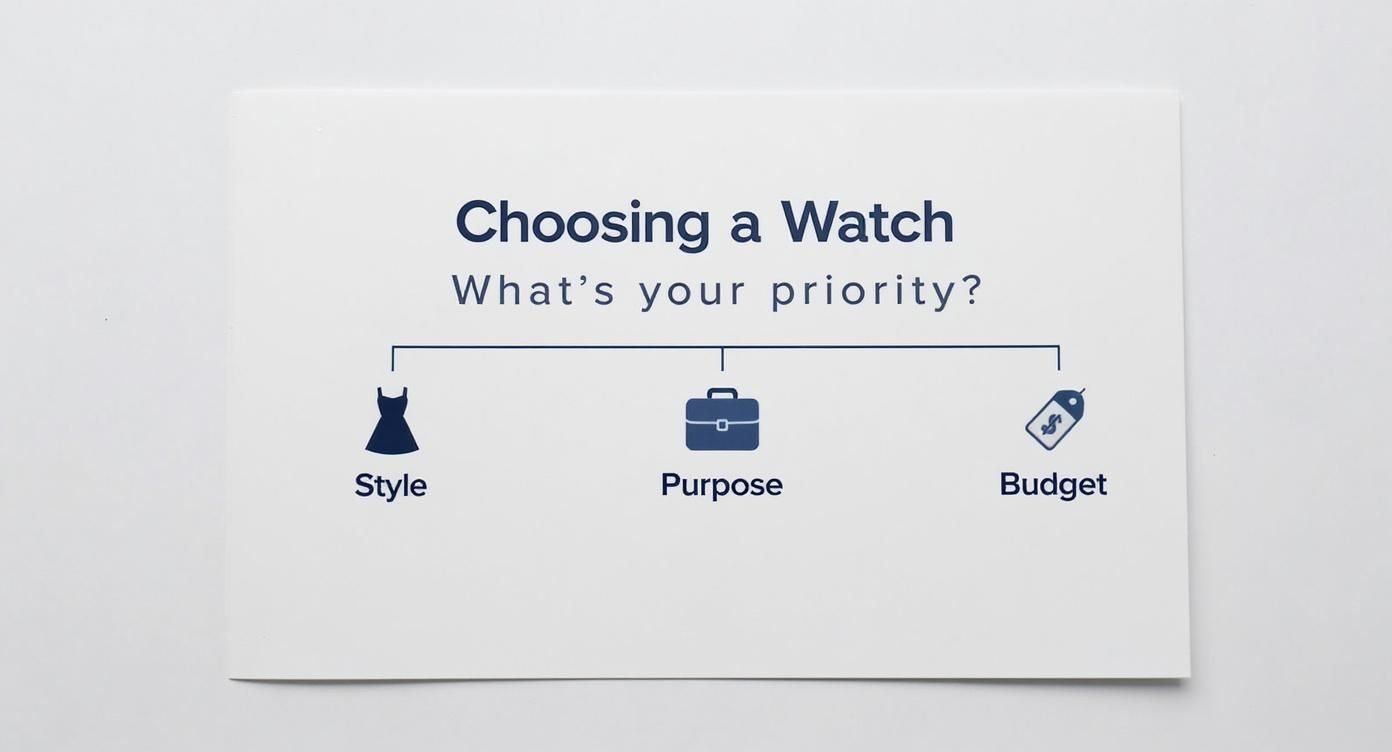
As you can see, figuring out your "why" is the perfect first step. It sets you on a clear path. A great next step is getting familiar with the main categories, and our guide on the different types of watches is the perfect place to start.
Understanding the Engine Inside Your Watch
The movement is the heart of a watch—it's the tiny, intricate engine that brings it to life. When you're looking for the perfect timepiece, one of your biggest decisions will be choosing between a quartz or an automatic movement. This choice really shapes how you’ll interact with your watch every day.
Think of it like choosing between a modern electric car and a classic vintage motor. A quartz movement is the electric car: efficient, incredibly precise, and powered by a battery. It’s the ultimate in "set it and forget it" convenience.
An automatic movement, on the other hand, is that classic car. It’s a marvel of traditional engineering, powered entirely by the motion of your body. It's for those who love the heritage, the craftsmanship, and the feeling of wearing something with a soul.
The Reliable Power of Quartz
Quartz watches are the workhorses of the watch world. Inside, a battery sends a tiny electrical current through a piece of quartz crystal, causing it to vibrate at an exact frequency. These vibrations drive the hands forward with near-perfect timing. It's a simple, brilliant, and incredibly reliable system.
The biggest plus here is unmatched accuracy. A good quartz watch might only lose a few seconds over an entire month. They also tend to be more resilient to bumps and knocks, making them a fantastic, practical choice for daily life. All you need to do is change the battery every few years.
For many, the quartz movement offers the perfect blend of style, precision, and ease. It’s always on time and always ready to go—no fuss required.
The Timeless Charm of Automatic
Automatic movements are pure mechanical poetry. They’re a miniature world of over 100 gears, springs, and jewels working together without a single electronic part. Instead of a battery, a weighted rotor inside the watch spins as you move your arm, winding a mainspring that powers the watch. It literally runs on you.
The magic of an automatic is that it's self-sustaining, as long as you wear it. If you set it down for a couple of days, it will run out of power and you’ll need to wind it and reset the time. While they aren't as precise as quartz—gaining or losing a few seconds a day is normal—their appeal is in their artistry. Many have a see-through case back, so you can actually watch the mesmerising dance of the mechanism inside.
If you’re curious to see more, our guide explaining how a watch works dives much deeper into these beautiful mechanics.
Which Engine is Right for You?
So, quartz or automatic? There’s no wrong answer. It all comes down to what you want from your watch and how it fits into your life.
Here’s a simple way to think about it:
- Looking for convenience? If you want a grab-and-go watch that’s always accurate and needs minimal attention, quartz is your best bet.
- Fascinated by craftsmanship? If you appreciate fine engineering, tradition, and a more hands-on connection to your timepiece, an automatic offers a truly special experience.
- Considering the cost? Generally, quartz watches are more accessible, while automatics are an investment in intricate artistry.
Ultimately, a quartz watch offers modern, practical elegance. An automatic is a piece of living history on your wrist, connecting you to centuries of watchmaking passion.
Matching a Watch to Your Lifestyle
The perfect watch should feel less like an accessory and more like a natural extension of you. It needs to keep up with your busiest days, celebrate your most important moments, and just feel right, no matter what you're doing. Finding the best watch is really about understanding your own rhythm and choosing a timepiece that syncs with it perfectly.
Think of it like choosing shoes. You wouldn't wear stilettos on a mountain hike or hiking boots to a black-tie wedding. A watch is much the same; each style is designed with a specific purpose and environment in mind.
So, let's step beyond the technical jargon and connect the different watch categories to your real, day-to-day life. When you can visualise how each style fits into your world, the choice becomes much more intuitive.
The Elegant Dress Watch
Imagine you're at a close friend's wedding or an important formal dinner. Your outfit is perfectly planned, and every detail matters. This is where the dress watch truly shines. It’s the very definition of understated elegance, designed to complement your look, not command attention.
Dress watches are typically slender and refined. They have simple, clean dials with minimal features—often just two hands for the hour and minute. You’ll usually find them crafted from precious metals or polished stainless steel, paired with a fine leather strap or a delicate metal bracelet.
- When to Wear It: Formal events, weddings, award ceremonies, and any occasion where sophistication is the goal.
- Key Characteristics: Slim profile, uncluttered dial, classic materials, and smaller case sizes.
- Think Of It As: The final, perfect piece of jewellery that completes a formal outfit.
The Versatile Everyday Watch
Now, picture a typical week. You have work meetings on Monday, a casual lunch with colleagues on Wednesday, and weekend brunch on Saturday. You need a reliable, stylish companion that can handle it all without missing a beat. This is the job of the everyday watch.
This category is all about balance. These watches are durable enough for daily wear but still refined enough for professional settings. They often feature stainless steel cases, clear, easy-to-read dials (usually with a date window), and comfortable bracelets or sturdy straps. It’s the kind of watch you can put on in the morning and forget it's even there.
The everyday watch is the true workhorse of any collection. It’s dependable, versatile, and effortlessly stylish, making it the most practical and frequently worn timepiece for most women.
The Rugged Sport Watch
Your weekend plans involve a challenging hike along the coast or a tough session at the gym. You need a watch that’s as resilient and determined as you are. This is where the sport watch comes in, built from the ground up for action and adventure.
Durability is everything here. Sport watches are defined by features like robust water resistance, tough materials like stainless steel or titanium, and highly legible dials, often with luminous hands for low-light conditions. Many include practical tools like a chronograph (a stopwatch) or a rotating bezel for timing activities. They are designed to withstand bumps, sweat, and whatever the elements throw at them.
The growing popularity of this style reflects a bigger shift in how we see watches. Today, they're much more than just time-tellers; they're fashion statements and symbols of personal style. In fact, the luxury watch segment in Europe, including Croatia, is set to grow at a compound annual rate of 3% between 2025 and 2035, driven by this rising fashion consciousness. Digital platforms have been a huge influence, shaping tastes towards both classic designs and robust sport models. You can dig deeper into this market evolution with these insights on luxury women's watches.
The Connected Smartwatch
Finally, think about a day where you’re juggling emails, trying to hit your fitness goals, and managing your calendar, all while on the move. The smartwatch acts as your personal assistant, seamlessly integrating your digital life right onto your wrist.
More than just a timepiece, a smartwatch delivers notifications, tracks health metrics like your heart rate and steps, and offers apps for everything from navigation to contactless payments. They offer incredible functionality, and with customisable digital faces, you can change your watch's look to match your outfit or mood in seconds. For the modern, connected woman who values efficiency and data, a smartwatch is the ultimate tool.
Sizing and Materials: Getting the Fit and Feel Just Right
Beyond a watch's style and inner workings, the way it physically feels on your wrist is what makes you fall in love with it. A watch that pinches, feels too heavy, or scuffs at the slightest knock will end up forgotten in a drawer. That’s why getting the size and materials right is so important—it’s the key to comfort, durability, and a piece you’ll want to wear day in, day out.
Think of this as the secret to finding a watch that feels like it was made just for you. It's all about striking that perfect balance between how it looks, how it feels, and how well it stands up to your lifestyle.
Finding Your Perfect Case Size
One of the biggest questions people have when buying a watch online is, "Will it look right on me?" The number to focus on is the case diameter—the width of the watch face, measured in millimetres (mm). While your personal taste is what matters most, a few general guidelines can help you find a truly flattering fit.
Imagine you're framing a favourite photograph. A frame that's too big will completely overwhelm the picture, but one that's too small will make it seem insignificant. Your watch case should complement your wrist, not overpower it.
- Under 30mm: These are your classic petite sizes. They’re perfect for slender wrists or for anyone who prefers a delicate, almost jewellery-like look. Many traditional dress watches sit comfortably in this range.
- 31mm to 36mm: This is the sweet spot for most women. It’s a wonderfully versatile size that has a clear presence without ever feeling chunky, making it a brilliant choice for an everyday watch.
- 37mm and Above: Welcome to the world of "boyfriend" or oversized styles. These watches are designed to make a statement and are fantastic for a modern, fashion-forward look.
Here's a quick trick for checking the fit: make sure the lugs—those are the little points where the strap connects to the case—don't hang over the edges of your wrist. If they do, the watch is probably a bit too large and won't sit flush and feel comfortable.
A Guide to Watch Materials
The materials of a watch don't just dictate its look; they define its weight, how it feels against your skin, and how it handles the realities of daily life. From the case that protects the movement to the crystal that covers the dial, every element matters.
Here’s a look at the most common materials you’ll encounter and what they mean for you.
Watch Material Durability and Style Guide
| Material | Pros | Cons | Best For |
|---|---|---|---|
| Stainless Steel | Highly durable, resists rust, versatile polished or brushed look, affordable. | Can be heavy, may cause allergies for those with nickel sensitivity. | Everyday wear, sports watches, dress watches—a true all-rounder. |
| Titanium | About 40% lighter than steel but just as strong, hypoallergenic, corrosion-resistant. | More expensive than steel, can scratch more easily (though scratches can often be buffed out). | People with active lifestyles or sensitive skin who want a lightweight feel. |
| Leather Strap | Classic and elegant, comfortable, conforms to your wrist over time, wide variety of colours. | Not water-resistant, shows wear and tear over time, needs occasional replacement. | Office wear, formal occasions, and adding a touch of timeless style. |
| Silicone/Rubber Strap | Waterproof, durable, easy to clean, comfortable and flexible. | Can look overly casual, may trap sweat in hot weather. | Sports, swimming, and anyone who needs a tough, no-fuss option. |
| Sapphire Crystal | The gold standard. Exceptionally hard and virtually scratch-proof. | More expensive, can shatter under a very hard, direct impact. | A quality timepiece you want to keep looking pristine for years to come. |
| Mineral Crystal | More scratch-resistant than basic acrylic, good clarity. | Can still be scratched by harder materials and is difficult to polish. | Good-quality, affordable watches for everyday use. |
Ultimately, choosing the right material is about matching your watch to your life. A polished steel watch with a sapphire crystal is built to look great through years of daily wear, while a classic leather strap offers an unmatched sense of elegance for the office or special events. By understanding these differences, you can find a watch that isn't just beautiful, but perfectly suited to you.
How to Find Great Value at Any Price Point
It’s a common myth that you need to spend a fortune to get a beautiful, reliable watch. The reality is, you can find a fantastic timepiece on almost any budget. The secret isn't just staring at the price tag; it's about understanding what genuine value looks like at each level.
Whether you have €50 or €5,000 to spend, the goal is the same: find a watch that delivers the best quality, design, and performance for your money. By breaking down the market into a few key tiers, you’ll know exactly what to look for and where your money is best spent.
The Entry-Level Tier: Under €100
This is where you can find an incredible variety of stylish and dependable watches without breaking the bank. The hero of this category is the quartz movement, which is brilliant news if you’re after a low-maintenance, accurate watch you can just grab and go.
At this price, focus on brands known for solid reliability and a good eye for design. You're looking for little details that elevate the watch, like a nicely finished stainless steel case, a clear mineral crystal, and a comfortable strap. This is the perfect space to play with new trends or find a durable daily companion without a big financial commitment. If you’re hunting for a bargain, take a look at our guide to the best affordable watches for women.
The Mid-Range Tier: From €100 to €500
Stepping up into this range opens a whole new world of possibilities. This is where you start to see noticeable upgrades in materials, build quality, and the mechanics ticking inside.
Here’s what you can expect to find:
- Better Materials: Keep an eye out for watches with sapphire crystal. It’s exceptionally scratch-resistant and a massive step up in durability from the standard mineral glass.
- Finer Craftsmanship: Cases and bracelets feel more substantial. You’ll notice better polishing, more intricate details, and an overall more premium feel on the wrist.
- A Choice of Movements: This is where you can find your first quality automatic movements from respected makers, offering all the old-school charm of traditional watchmaking.
This segment is a big deal in the European market. In fact, watches priced between €100–€300 are often the most popular choice for aspirational buyers, which just goes to show how much quality and value people find here. While specific data for Croatia is part of the broader regional trends, the European average confirms this mid-range sweet spot is where a huge part of the market lies.
For many shoppers, this price range is the sweet spot. You get a tangible leap in quality and can invest in a timepiece that's truly built to last for years to come.
The Premium Tier: Above €500
Once you cross the €500 mark, you’re moving into the world of premium and luxury watchmaking. Here, a watch becomes more than just a tool for telling time—it's an investment in artistry, heritage, and exceptional engineering.
In this tier, your money goes towards:
- Brand Heritage: You're buying into the legacy of storied brands with decades, sometimes centuries, of history and innovation behind them.
- In-House Movements: Many brands will use their own beautifully decorated and precisely regulated automatic movements, a true mark of a high-end watchmaker.
- Exceptional Finishing: Every single detail, from the polish on the hands to the engraving on the case back, is executed to an incredibly high standard.
At the end of the day, value exists at every price point. It’s all about finding that €75 watch that performs like it’s worth €150, or a €750 timepiece that offers the craftsmanship of something double its price.
Essential Tips for Watch Care and Maintenance
A beautiful watch is more than just an accessory; it's an investment in your personal style. And like any treasured possession, a little care will go a long way in keeping it looking and running its best for years to come.
Think of it as a simple routine, not a chore. By adopting a few easy habits, you can protect your timepiece from the daily grind and ensure it remains a stunning part of your collection. From a quick wipe-down to understanding what water resistance really means, these tips will help preserve its beauty and function.
Daily and Weekly Cleaning Habits
It’s surprisingly easy to keep your watch looking brand new. Over time, things like dust, lotions, and perfumes can build up, dulling the shine of the case and bracelet. A simple, regular clean makes all the difference.
Once a week, take a soft, dry microfibre cloth and give the case, crystal, and strap a gentle polish. If you have a water-resistant watch with a metal bracelet, you can go a step further. Use a soft brush with a touch of mild soap and warm water to get between the links, then make sure to dry it completely.
A Quick Word of Warning: Steer clear of harsh chemicals or abrasive cleaners. They can wreak havoc on delicate finishes, gaskets, and special coatings, which can ruin the look of your watch and compromise its water resistance.
Understanding Water Resistance
The water resistance rating on a watch can be a bit misleading. It's based on pressure tests in a controlled lab setting, which doesn't quite translate to real-world swimming or diving. A "50-metre" rating definitely doesn't mean you can take it 50 metres deep.
Here’s a more practical way to look at it:
- 30M (3 ATM): Think splash-proof. It can handle a bit of rain or washing your hands, but that's it. Don't submerge it.
- 50M (5 ATM): Fine for a quick dip in the pool, but it's not built for diving or intense water sports.
- 100M (10 ATM): Now you're safe for swimming, snorkelling, and most water activities.
- 200M+ (20 ATM+): These are the real deal, built for serious water sports, including scuba diving.
And a golden rule: always, always make sure the crown is pushed in or screwed down securely before your watch gets anywhere near water.
When to Seek Professional Servicing
While a quartz watch just needs a new battery every few years, an automatic watch is a different beast. Inside that case is a complex little engine with tiny, lubricated parts that need professional care to keep them from wearing out.
As a general rule, plan to have your automatic watch serviced by a professional every three to five years. This isn't just a suggestion; it's a crucial check-up to maintain its accuracy and health. A little professional care ensures your beautiful investment will keep ticking perfectly for a lifetime.
Got a Few Last-Minute Questions?
Picking out the perfect watch can bring up a few final thoughts, especially with so many beautiful options out there. This is where we clear up some of the most common questions we hear from our customers. Think of it as a quick chat to make sure you’re completely happy and confident with your choice.
We’ll cover the practical things that pop up, from budgets to styling, so you have everything you need to find a watch you’ll truly love wearing for years to come.
Can I Wear a Man's Watch?
Of course! The line between "men's" and "women's" watches is more blurred than ever, and that's a great thing. A lot of women actually prefer the confident, slightly bolder look of a larger case size, which you'll often find in ranges that were once aimed just at men. It all comes down to your personal taste and what feels right on your wrist.
Take the Hamilton Khaki Field Murph in 38mm or anything from the Seiko 5 Sports collection—both are huge hits with everyone because of their go-anywhere, do-anything vibe. Don't ever let a label put you off. If you love how a watch looks and feels, then it’s the perfect watch for you.
The "boyfriend watch" trend, known for its chunkier cases and sturdier designs, is still going strong. It’s a perfect example of how style rules are really just suggestions, and the best choice is always the one that speaks to you.
What Is a Good Starter Watch for a Collection?
For a first "serious" watch, that mid-range price tier is the sweet spot where you get amazing quality for your money. A brand like Tissot is a brilliant place to start, especially with something from their PRX line. You're getting proper Swiss watchmaking, that cool integrated bracelet look that’s so popular right now, and you can choose between an easy-to-live-with quartz or a proper automatic movement.
Another fantastic choice would be a classic from Orient, like the Bambino. It gives you the full, authentic experience of owning a mechanical watch but at a price that won’t make you wince. Either way, you're getting a huge jump in quality without a massive investment.
How Do I Match My Watch to My Jewellery?
Good news: mixing metals isn't just okay anymore, it’s a seriously stylish move. The trick is to make it look deliberate and balanced.
- Create a Bridge: A two-tone watch (steel and gold) is your best friend here. It naturally ties both silver and gold jewellery together, making your whole look feel cohesive.
- Pick a Leader: Let one metal be the star of the show. For instance, if your watch is steel, make most of your other pieces silver-toned and just add one or two gold items as an accent.
- Play with Textures: Don't be afraid to mix finishes. A watch with a brushed steel bracelet looks fantastic next to a couple of shiny, polished gold bangles.
At the end of the day, there are no hard-and-fast rules. It's all about creating a stack on your wrist that feels like you.